
Examining Article 6 Readiness: A Balancing Act without Guardrails
/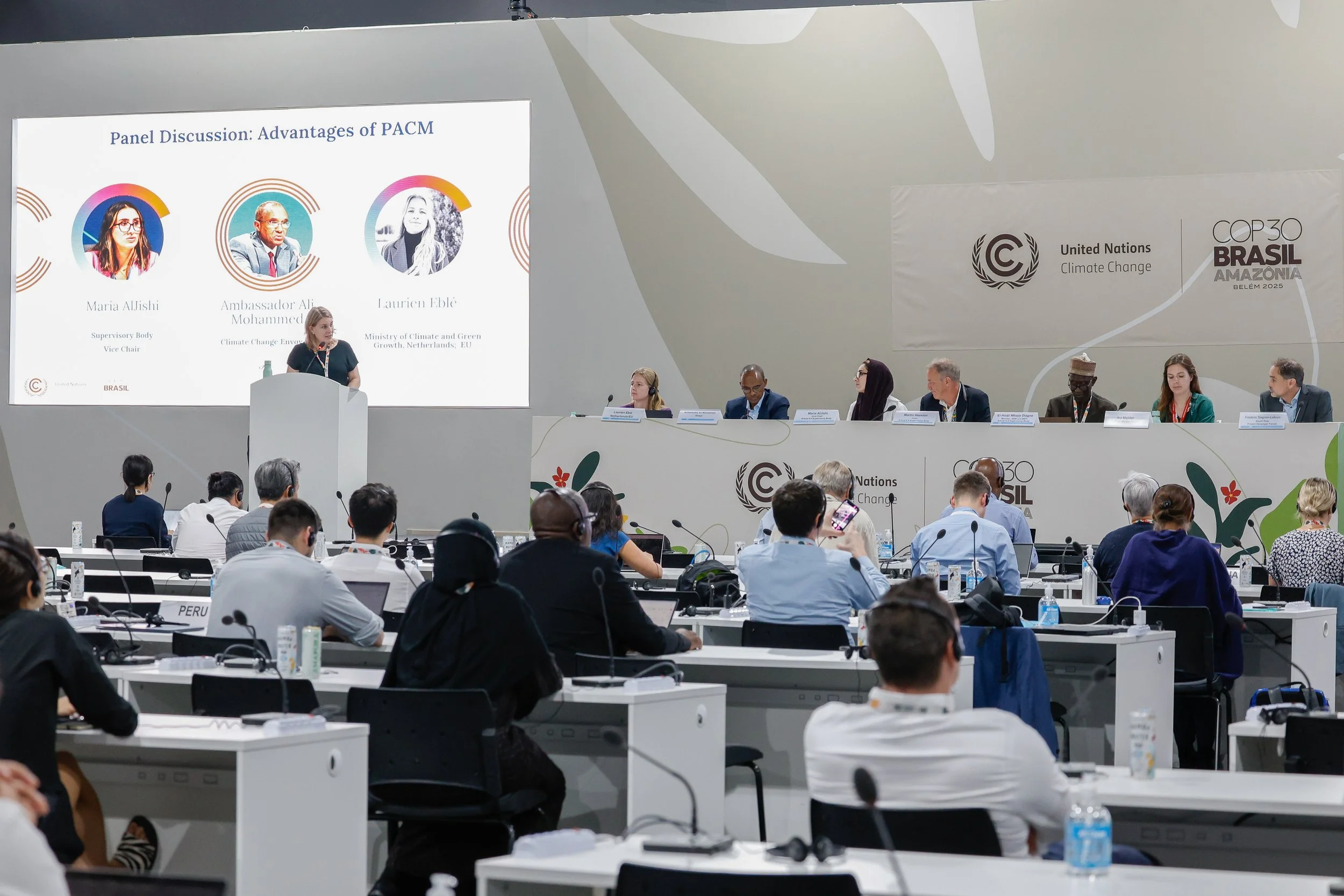
“Raising the Bar Integrity and Impact with the Paris Agreement Crediting Mechanism” by UNclimatechange, CC BY-NC-SA 4.0
As countries have begun setting up domestic systems to manage emissions reduction units and trade them internationally under Article 6, domestic regulatory frameworks have come to play a major role in defining the overall integrity of the UNFCCC’s Carbon Trading mechanisms. SDSG carbon intern hunter sims assesses what “article 6 readiness” means in practice using 3 case study jurisdictions central to SDSG’s work on carbon markets.
By Hunter Sims
Article 6 of the Paris Agreement is poised to change the landscape of carbon markets for the foreseeable future, opening up the trade in carbon emissions reductions to international bilateral deals between states (Article 6.2) and UNFCCC oversight (Article 6.4). But many questions remain. The rules and guardrails governing Article 6 are weak, this is particularly the case for Article 6.2 whose bilateral deals to exchange Internationally Transferred Mitigation Outcomes (ITMOs) lack strong transparency requirements. The extent to which credits represent real, permanent, and additional emissions reductions (created responsibly and transparently) relies on the participating countries’ ability to regulate projects.
As a result, much of the debate centers on what constitutes “Article 6 readiness”, particularly the ability of countries to link carbon trading decisions with their Nationally Determined Contributions (NDCs). Since ITMOs must be accounted for through corresponding adjustments, countries must ensure that any emissions reductions authorized for transfer abroad do not undermine their own climate targets. This creates a structural tension between participating in carbon markets and achieving domestic mitigation goals, making institutional coordination across climate policy, registries, and accounting systems a central challenge.
In this short blog, we review three case studies that have formed the basis of SDSG’s work on carbon markets more broadly – Kenya, Indonesia, and the Democratic Republic of the Congo – to discuss different levels of Article 6 “readiness”, in particular readiness for Article 6.2 bilateral deals whose lack of clear guardrails pose challenges for public scrutiny. Kenya and Indonesia are ahead of the Democratic Republic of Congo (DRC) in terms of readiness. Both countries have established formal bilateral cooperation frameworks and are actively building the institutional systems needed for carbon transfers, including authorization rules, registries, and UNFCCC participation.
Kenya has signed Article 6.2 agreements with Switzerland and Sweden, implemented comprehensive carbon market regulations, and is in the process of finalizing a national carbon registry. Indonesia has a long-standing partnership with Japan through the Joint Crediting Mechanism (JCM) and has strengthened this through a formal mutual recognition arrangement aligned with Article 6.2. It has also submitted its Article 6.4 participation requirements to the UNFCCC.
In contrast, DRC, despite its long history with the UN-backed Reducing Emissions from Deforestation and forest Degradation (REDD+) program, has taken only early steps. It has established a Designated National Authority (DNA) for Article 6.4, but there are as yet no Article 6.2 agreements while operational systems for authorizing and tracking carbon transfers remain underdeveloped, if at all. Key components like authorization frameworks are still under development, as is DRC’s national carbon registry which, while operational, has proven to have major limitations already.
At the global level, Article 6.2 remains in an early phase. Many agreements have been signed, but actual ITMO transfers are still rare as countries continue building the complicated institutional systems needed to implement them.
Meanwhile, Article 6.4 is beginning to move forward. In February 2026, the UNFCCC approved the first issuance of credits under the Paris Agreement’s centralized carbon market, signaling a shift from rulemaking to early implementation. Kenya and Indonesia have formally submitted participation requirements for this system, while DRC has not yet done so.
Overall, the key takeaway is that carbon markets under Article 6 are still being built and much of what this looks like depends on what countries are doing domestically. Kenya and Indonesia are pushing forward on institutional readiness while DRC is still in the early stages; all of them face serious tradeoffs and the UNFCCC’s architecture for Article 6.2 means questions surrounding due diligence, accountability, and integrity fall on the countries party to bilateral agreements.
kenya
Kenya is among the more advanced countries in Africa in terms of progress toward Article 6.2 implementation, though others are leading the charge.
It has signed formal bilateral agreements, most notably with Switzerland and Sweden, which are explicitly structured to enable the transfer of ITMOs. The agreement with Switzerland (signed May 2025) is particularly significant because it includes detailed provisions on authorization, registries, and corresponding adjustments—key requirements for Article 6 transactions. In particular, the agreement lays out how Kenya must formally approve each ITMO transfer and adjust its national emissions accounting accordingly. These provisions are critical because they ensure emissions reductions are properly accounted for and not double counted, which has been a central concern in carbon market integrity debates. Sweden has also publicly listed a similar agreement with Kenya, reinforcing its position as a credible carbon market partner.
Beyond signed deals, Kenya has also engaged in advanced negotiations, including discussions with Singapore on future Article 6 cooperation. Additionally, a cooperative approach with Japan exists through the Joint Crediting Mechanism (JCM), which is recognized within UNFCCC systems, even if full transfer activity has not yet occurred
In terms of Article 6 readiness, Kenya has made substantial progress domestically. The country adopted the Climate Change (Carbon Markets) Regulations, 2024, which establish governance structures, define authorization procedures, and explicitly prohibit double counting. Kenya has moved toward operationalizing the Kenya National Carbon Registry (KNCR), a NEMA-managed digital platform intended to track, verify, and manage carbon credits and ITMOs. A key feature of Kenya’s National Carbon Registry (KNCR) is that it is designed to track both project-level data and ITMO authorizations within a single system, enabling alignment between domestic mitigation activities and international transfers. Furthermore, Kenya has formally submitted its Article 6.4 host participation requirements to the UNFCCC, signaling readiness to participate in the centralized mechanism.
Despite this strong institutional foundation, Kenya has not yet demonstrated a confirmed ITMO transfer, reflecting a broader global trend where many agreements exist but actual transactions remain limited. Overall, Kenya is moving towards a position of high ‘readiness’ institutionally, with many remaining challenges moving from agreements to operational transfers. Kenya’s history of land rights controversies in the voluntary market and the collapse of Koko Networks’ clean cookstove program earlier this year make it clear that this is a complicated issue, with livelihoods, the green transition, and competing visions for Kenya’s future at play.
democratic republic of the congo
In contrast to Kenya, the Democratic Republic of Congo (DRC) has not yet signed Article 6.2 bilateral agreements. Available public data, including UNFCCC cooperative approach listings, does not show DRC as an active participant in a formal Article 6.2 partnership. This suggests that while discussions may exist, they have not yet translated into formalized agreements.
However, DRC has taken an important step by establishing a Designated National Authority (DNA) for Article 6.4, known as the Carbon Market Regulatory Authority (ARMCA). This creates an institutional entry point for participation in international carbon markets. Still, compared to Kenya and Indonesia, DRC’s engagement remains at an earlier stage.
The most significant limitation is institutional readiness. A World Bank assessment highlights that DRC lacks key components required for Article 6.2 participation, including:
Formal authorization procedures for ITMOs
A national registry system to track transfers
These gaps are critical because they prevent the country from executing and accounting for international carbon transactions. While DRC may rely on interim UNFCCC systems, domestic infrastructure is not yet fully developed.
In addition, limited institutional capacity makes it difficult to manage the interaction between carbon markets and national climate commitments. Without clear systems for tracking and accounting emissions reductions, integrating ITMO transfers with NDC reporting presents a significant barrier to participation.
That said, DRC holds strong potential due to its large forest-based mitigation opportunities, particularly through REDD+ and jurisdictional programs. These could eventually position the country as a major supplier of carbon credits. However, this also introduces risks related to governance, land tenure, and benefit-sharing – all issues that have historically plagued carbon markets and on which the Article 6.2 rulebook offers sparse guidelines.
Overall, DRC can be characterized as early-stage in Article 6 readiness, with foundational institutional work still required before meaningful participation or deal-making can occur.
Indonesia
Indonesia represents a hybrid case, combining strong institutional readiness with multiple bilateral cooperation efforts, though not all are equally advanced.
The most important development is Indonesia’s Mutual Recognition Arrangement (MRA) with Japan (2024), which explicitly aligns their long-standing Joint Crediting Mechanism (JCM) with Article 6.2 requirements. This agreement includes provisions for authorization, MRV (monitoring, reporting, verification), registry integration, and corresponding adjustments, making it one of the clearest examples of an operational Article 6.2 framework.
Indonesia has also signed a bilateral agreement with Norway under Article 6 to support renewable energy cooperation, and an MOU with South Korea to incentivize emissions reduction projects. Indonesia’s agreement with Norway is notable because it creates a general Article 6 framework for future ITMO purchases, with a Mitigation Outcome Purchase Agreement still to be negotiated. In contrast, its agreement with South Korea focuses on developing emissions reduction projects and future carbon trading cooperation, but lacks the detailed provisions on authorization and corresponding adjustments seen in the Japan MRA, highlighting the uneven maturity of Indonesia’s bilateral portfolio. While these agreements demonstrate strong international engagement, not all provide the same level of detail or readiness for ITMO transfers as the Japan arrangement.
Domestically, Indonesia shows high readiness. It has:
A national registry system (SRN PPI), plus another comprehensive registry in progress (SRUK) to track carbon unit data separately from NDC concerns and which is interoperable with voluntary market registries.
Legal provisions enabling international carbon trading
A formally designated DNA
Submitted its Article 6.4 host participation requirements to the UNFCCC
These elements indicate that Indonesia has built much of the institutional infrastructure required for participation.
However, like Kenya, Indonesia has limited evidence of completed ITMO transfers, reflecting global delays in moving from agreements to execution. A central challenge is managing the relationship between carbon exports and domestic mitigation targets, particularly as Indonesia balances international cooperation with its own NDC commitments and complex sectoral decarbonization pathways.
Overall, Indonesia can be considered highly prepared, with strong bilateral engagement and institutional systems already in place. On the other hand, the complexity of Indonesia’s carbon pricing system, its sectoral pathways, and the emerging role that voluntary credits could play in all this pose serious questions about land tenure, benefit-sharing mechanisms, and the nature of carbon rights.
conclusion
Across all three cases, a clear pattern emerges: progress under Article 6.2 is driven less by the number of agreements signed and more by the strength of domestic institutional systems that enable those agreements to function in practice. Kenya and Indonesia demonstrate relatively high levels of readiness due to their development of authorization frameworks, registry systems, and alignment with UNFCCC requirements, while DRC remains in an earlier stage due to gaps in these core components.
At the same time, the lack of confirmed ITMO transfers across all three countries reflects a broader global reality, Article 6 markets are still in a transitional phase between agreement-making and full operationalization. The next phase of development will likely depend on whether countries can move from building frameworks to executing transactions while maintaining environmental integrity, avoiding issues such as double counting, and addressing persistent equity problems in carbon projects.
Integrity questions are key here. Without central oversight, important considerations like environmental standards, transparency and reporting rules, and accountability mechanisms are to be defined by the negotiating parties, either through deals or domestic regulations. The rules contain no clear safeguards against misconduct nor do they require independent grievance mechanisms for redress. In short, the potential for opaque bilateral deals with little oversight or public scrutiny is high, with a lot falling on the shoulders of national governments to adequately balance NDC implementation with international transfers, securely account for carbon units, and ensure transparent oversight and accountability – not to mention share potential benefits from projects in an equitable way. Civil society involvement in shaping these systems and putting pressure on existing carbon market actors and government officials alike who see Article 6 readiness as a key to unlocking carbon revenues will be important in the years to come.