Indonesia’s nickel refining boom: lessons for other mineral-rich countries

Indonesia’s policies have supported the growth of a nickel refining industry. This experience offers valuable insights for countries pursuing a similar path.

By Lorenzo Cotula and Brendan Schwartz

Lorenzo Cotula is head of IIED's law, economies and justice programme; Brendan Schwartz is Executive Director at the Sustainable Development Strategies Group

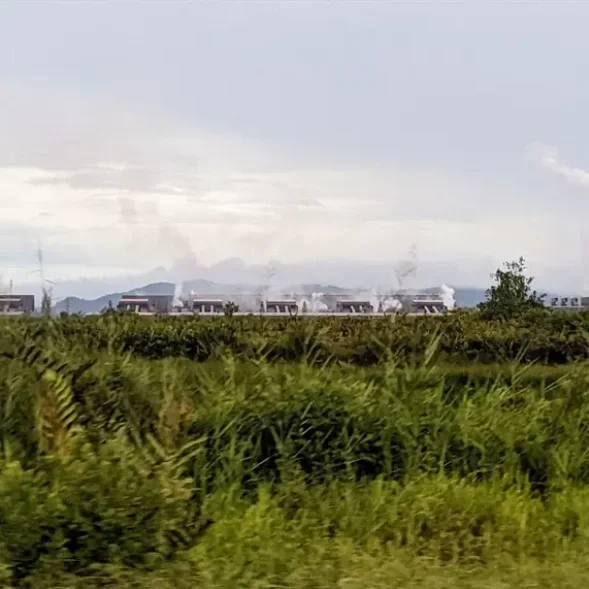
Nickel smelters in Sulawesi, Indonesia (Photo: copyright Adam Pantouw)

In low- and middle-income countries looking to harness their mineral wealth for industrial development, Indonesia's nickel sector is often touted as a success story. As the world’s dominant nickel producer, Indonesia has rapidly developed a sizeable domestic refining industry, creating jobs and increasing the value of nickel-derived exports.

Eager to break from trading patterns that have long confined them to exporting raw materials, governments in many mineral-rich countries are looking to emulate Indonesia’s model and promote industrialization.

Our recent visit to the island of Sulawesi – a hotspot for Indonesia’s nickel industry – highlighted a more complex picture. The visit was part of the Advancing Land-based Investment Governance (ALIGN) project, which over the past two years has supported activities to strengthen the governance of nickel operations in Southeast Sulawesi.

A more rounded understanding of Indonesia’s nickel refining boom can provide insights for policymakers seeking to renegotiate the way costs and benefits are distributed in critical mineral supply chains.


the nickel boom

In Indonesia, nickel mining has expanded substantially over the past 15 years. It is estimated that, as of late 2023, nearly one million hectares of land were under nickel mining permits, primarily on the Sulawesi and North Maluku islands.

Today, Indonesia accounts for about 60% of global nickel production. A good part of this nickel is for batteries and steel used in electric cars.

Through measures adopted since 2014, the government restricted and ultimately banned the export of unprocessed nickel ore, aiming to promote local value addition. Regulations also mandated mining companies to refine locally the nickel they extract – or to otherwise sell it to existing local smelters.

Within a few years, new nickel smelters were built in large industrial parks in Sulawesi and North Maluku, primarily by Chinese firms, establishing extensive local value addition capacity and consolidating Indonesia’s (and China’s) dominant position in global nickel markets.


one size fits all?

The success of Indonesia’s policies in promoting local value addition has encouraged several other mineral-rich countries to also restrict exporting raw materials.

Yet, the effectiveness of Indonesia’s export restrictions – which were found to be in breach of World Trade Organization rules (PDF) – is partly due to a unique set of conditions, such as the country’s commanding share of global nickel production and reserves, that are not necessarily present in other mineral-rich countries.

If governments replicate the same measures without Indonesia’s scale and leverage, they may not necessarily secure hoped-for benefits. Ill-suited restrictions could even undermine the viability of the country’s mining industry.


the captive coal lock-in

The rapid growth of Indonesia’s nickel refining industry has primarily relied on captive coal (coal-fired plants built to exclusively service a smelter).

While this has ensured steady access to energy, it makes Indonesia’s nickel particularly carbon intensive, creating a paradox for an industry that is supposed to support the energy transition.

Besides increasing carbon emissions, reliance on coal drives deforestation – for example in Central Kalimantan, where coal mining has expanded to meet the nickel smelters’ demand.

A 2022 regulation envisages measures for Indonesia’s electricity sector to transition away from coal-fired power, including a ban on new coal plants. But the ban exempts captive coal for domestic value addition, provided certain conditions are met.

Nickel-linked captive coal capacity has grown nearly fivefold (PDF) in 2014-23 and is projected to expand further over the next few years, barring a market downturn.

Efforts are underway to decarbonize the nickel supply chain but options are limited by the smelters’ geographic location – close to mines and ports, rather than renewable energy sources – and their need for vast amounts of reliable energy.

Meanwhile, plans to convert the power plants to mix coal with biomass (‘co-firing’) would greatly increase deforestation (PDF) due to the large plantations needed to produce biomass feedstock.


Rapidly growing industries and effective regulation

Stepping up in the value chain can help grow and diversify economies in low- and middle-income countries, many of which struggle with a dependence on commodity exports and with substantial debt burdens. Indonesia’s success in developing nickel value addition has created thousands of jobs.

But the sector has been marred by workplace accidents. And in Sulawesi and North Maluku, nickel mining and refining have been associated with extensive social and environmental impacts, including deforestation, land disputes, air pollution and water contamination. These impacts undermine the livelihoods of forest communities, small-scale farmers and fisherfolk.

Part of the problem is that the nickel industry’s rapid growth has outpaced capacities to effectively regulate the sector. For example, many nickel projects operate on small islands, in violation of a 2007 law that bans mining on such islands (the Constitutional Court upheld the legality of this ban in 2024).

In June 2025, public outrage about mining on small islands in Raja Ampat – home to some of the world’s most iconic coral reefs and marine life, and a big draw for tourists – prompted the government to suspend four mining permits.

In addition, the government reclaimed large areas of land under oil palm plantations and nickel and coal mines that were operating illegally on forest areas.

But civil society organizations and mine-impacted communities continue to highlight widespread non-compliance with applicable regulations, for example with regards to air pollution, mine reclamation and managing mine tailings.


Extracting lessons for policy

In Southeast Sulawesi, civil society organizations, with support from ALIGN, have been doing important work to address these problems – from promoting compliance with the ban to mine on small islands, to supporting community empowerment around mining sites and informing revisions to the provincial spatial plan that would restrict mining in heavily forested and biodiversity-sensitive areas.

In mineral-rich low and middle-income countries looking to promote domestic value addition, policymakers should carefully think through strategies tailored to their contexts. Holistically considering the social, environmental and economic dimensions of Indonesia’s experience provides helpful insights.

First, Indonesia’s experience highlights the conditions that need to be in place for certain industrial policy measures – such as local processing requirements – to be effective.

Second, it highlights the need for governments to proactively address issues that will affect the sector in the longer term, such as the management of mine reclamation and tailings, more participatory and inclusive spatial planning, effective community engagement (PDF), land rights recognition and low-carbon energy solutions.

In this vein, governments should consider energy options from the start, such as locating processing plants close to renewable energy sources, to avoid being locked into unsustainable arrangements that can ultimately hurt their global competitiveness.

Finally, Indonesia’s experience highlights the major impacts and complex trade-offs that can arise in industrialization processes – and the need for effective state capacity, regulation and enforcement throughout mineral supply chains.