

What Surrounds the Deposit: Experiences from the WARM-SEG Field Course on Mine Reclamation
/Copper built the American grid. The tailings pond at Chino is where the full weight of that fact becomes visible: a flat sheet of teal cut into the surrounding waste rock’s dull silver, vast in the particular way that only things built to last centuries can be. The energy transition will need more of what this ground has produced. The question is whether we have learned anything from what it left behind.
By: McKenna Dunbar
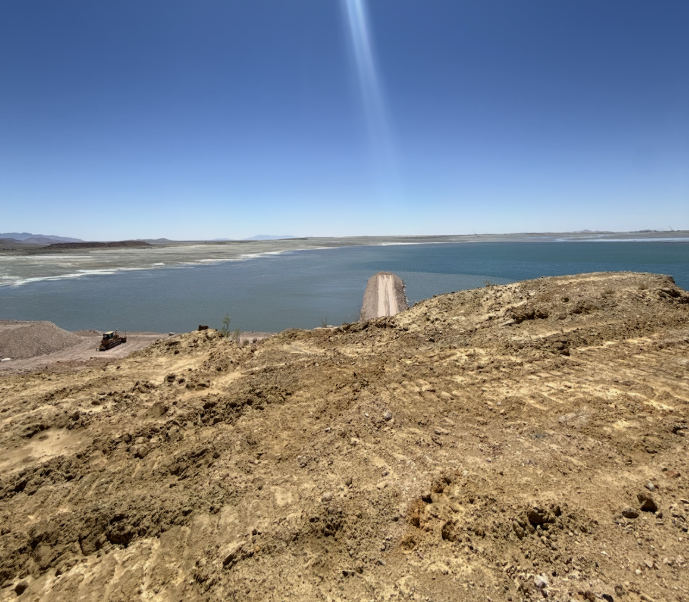
From the ridge, the tailings pond reads less like a mining feature than a lake that wandered in from somewhere else, flat, blue-gray, indifferent to the machinery working its edges. The desert has a way of absorbing scale until you stop trying to measure it. May 18, 2026 PC: McKenna DunbaR
I came to Grant County, New Mexico as part of the WARM-SEG field course on mine reclamation across the Four Corners region, organized by the Western Alliance of Reclamation Management and the Society of Economic Geologists. The course drew practitioners and researchers from Western Colorado University, Fort Lewis College, Colorado School of Mines, Colorado State University, the University of Arizona, the University of Wisconsin-Milwaukee, and more. My professional frame for the week was specific: the relationship between the materials the electrification economy demands and the governance frameworks that will determine how those materials are extracted and whether extraction produces lasting value or deferred cost in the future energy economy.
Days one and two were spent at two of Freeport-McMoRan’s copper operations in New Mexico, the Chino Mine near Silver City and the Tyrone Mine to the southwest. Together they offered something no conference panel or literature review can replicate: a sustained, ground-level encounter with the operational, environmental, and institutional legacy of large-scale copper extraction, and what responsible stewardship of that legacy looks like in practice.
Day One: Chino
The first stop at Chino was the remediation area adjacent to the tailings facility, and it set the tone for everything that followed. From where we stood, the teal water of the pond, luminous against the disturbed ochre ground, stretched across the basin floor in the middle distance. A concrete standpipe, remnant of an earlier infrastructure phase, stood marooned at the water’s edge, a quiet marker of how many operational generations this landscape has absorbed. Three cranes worked the far perimeter, their booms tracing slow arcs, rendered nearly decorative by the scale of what surrounded them. On the left shore, a bulldozer moved steadily along the waterline, small against the expanse, doing the unglamorous work that remediation actually consists of.
The material held in that pond, the physical residue of decades of copper production at one of the largest open-pit mines in the United States, occupies more landscape than most industrial facilities occupy across an entire operating life. It sits there, engineered and contained, what is left of extraction that powered American industry and now demands a quality of institutional attention that extraction rarely budgets for in advance.
The Freeport-McMoRan(FMI) remediation team walking our group through the site that morning spoke with a combination of technical precision, operational clarity, and evident care for the long-term trajectory of the sites they manage. A FMI engineer opened a buried tailings monitoring station in the field, an instrument case mounted on a post in the middle of that vast landscape, and explained what the subsurface data can help them reveal: the hydrology, the geochemistry, the timeline, the monitoring cadence. These were people who knew their site at a granularity that most policy conversations never reach.
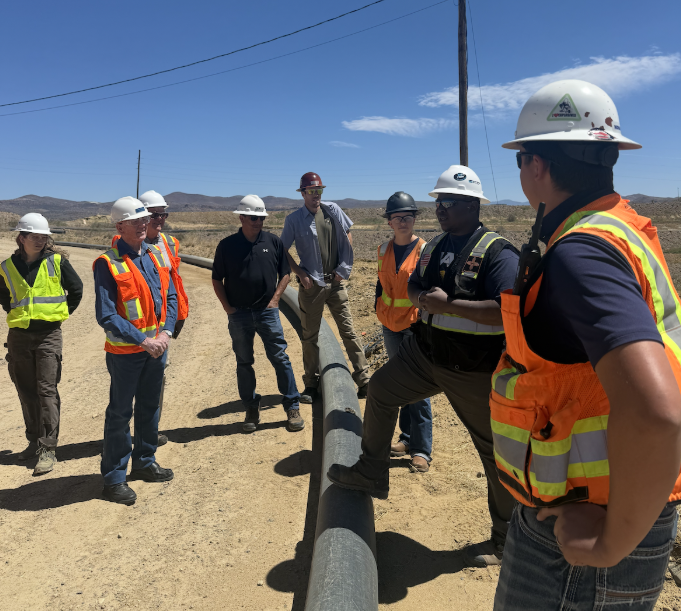
FMI's engineers meet WARM's Mine Reclamation Field Course under a sky with no clouds to speak of, fielding questions from a group that has, by now, learned to ask better ones. Out here, the briefing happens standing up, in the wind, with the mine itself as the only visual aid. May 19, 2026 PC: McKenna Dunbar
This in-depth field knowledge is important to keep in mind when we talk about governance. The easy narrative about mining’s environmental legacy, and the governance systems put in place to handle this legacy positions industry as the source of the problem and reclamation as the cost reluctantly extracted from it after the fact. The reality at Chino was considerably more textured.
The failures that produced that legacy were not. Closure planning requirements fell short because of the scale of extraction. Financial assurance mechanisms underpriced long-term obligation. A regulatory architecture lets the benefits of extraction land on one timeline while its costs built on another. Locating the failure in the closure and regulatory system, rather than in any single company’s conduct, does not excuse historical mining practices. This diagnosis is clear enough to produce solutions that work, understood best by the remediation crews who live within its consequences every day.
On the drive out, a herd of mule deer moved along the hillside above the haul road, unhurried and indifferent to the machinery we had just encountered in the distance. It was a moment of accidental juxtaposition, and it said something true: the landscape holds more than any single operation imposed on it, and it will be holding things long after the operation has concluded.
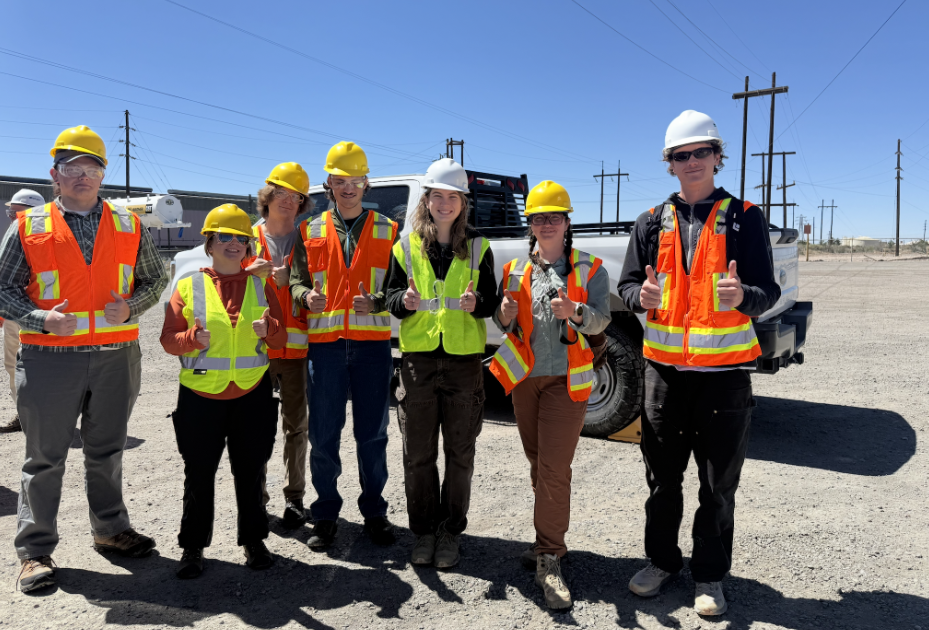
A parking-lot photograph, the kind that ends up meaning more than it should: a cohort of future reclamation professionals, on loan for a day to a landscape most people only encounter in headlines about critical minerals. May 18, 2026 PC: McKenna Dunbar
Later that afternoon, Luke Danielson gave a presentation at the Silver City Public Library which offered framing for the day’s observations. The figures he cited are not comfortable ones. Five hundred thousand abandoned mines across the western United States. Twenty-three thousand in Colorado alone. Forty percent of Colorado’s stream miles are impacted by acid rock drainage. The aggregate cost of reclaiming all abandoned hardrock mines in the West almost certainly exceeds the total assets of all the world’s mining companies combined.
Dr. Ann Maest, whose geochemical research traces contaminant pathways through aqueous systems, provided the empirical foundation for why this condition persists. A landmark review of 25 major hardrock mines operating between 1979 and 2005 found that, at 76 percent of sites, actual water quality impacts exceeded the predictions contained in Environmental Impact Statements.
That discrepancy is a governance problem. Prediction and accountability sit decades apart, and the money meant to cover long-term environmental liability is not there when it is needed. When the bond backing a prediction will fall short regardless, there is little reason left to get the prediction right. The evening ended without resolution, just a clear sense of the problem and no consensus yet on where to go from here.
Day Two: Tyrone
If Chino is defined by its scale, Tyrone is defined by its geology. The pit walls there are among the more visually arresting things I encountered across the entire week: banded in terracotta, rust, pale gray, and the unmistakable oxidized green of copper mineralization running through the benches in visible seams. Where Chino reads as an exercise in industrial arithmetic, Tyrone reads as a cross-section of the earth’s own record, the mineralization history of a porphyry copper deposit laid bare across hundreds of feet of exposed wall. At the floor of the pit, an amber pool had formed, acid mine drainage concentrated into a shallow lake the color of old brass.
Tyrone is a smaller operation than Chino, an important characteristic that is easy to overlook. The obligations of extraction do not scale linearly with the size of the mine. A smaller pit still produces tailings, still affects hydrology, still requires monitoring infrastructure and closure planning and the long-duration institutional attention that responsible stewardship demands.
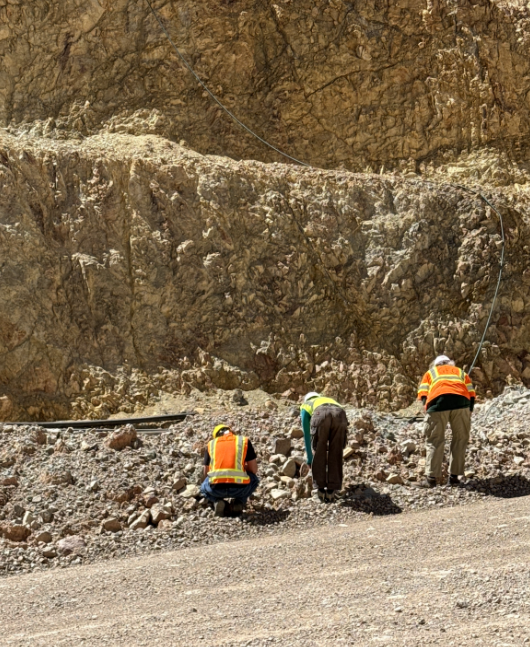
Bent over the talus, the group inspects rock the way geologists do, slowly, and with a kind of reverence that is filled with wonder. May 19, 2026 PC: McKenna Dunbar
What made Tyrone distinct as an experience was also its sheer scale. We stood next to the tire chains of one of the haul trucks, the linked steel rising above us in an enormous latticed wheel, and the arithmetic of the operation became immediately physical. Standing next to a massive tire, you understand fuel consumption differently. You understand safety protocols differently (safety first!).
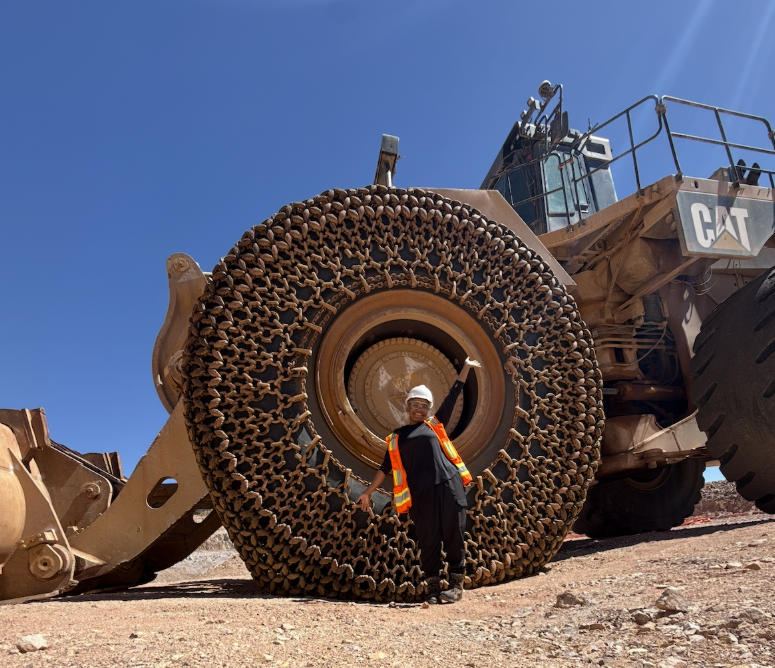
Beside a haul truck tire taller than most doorframes, the human figure becomes a unit of measurement. It's the West's oldest trick, using scale to humble whoever wanders into it! May 19, 2026 PC: Dr. Ann Maest
You understand what it means to say that a single machine in this industry requires operational systems, maintenance regimes, and safety infrastructure that most people never think about in connection with the copper in their electrical panel or the wiring in their electric vehicle. The cohort took a group photograph in the bucket of the loader. It held all of us without difficulty!
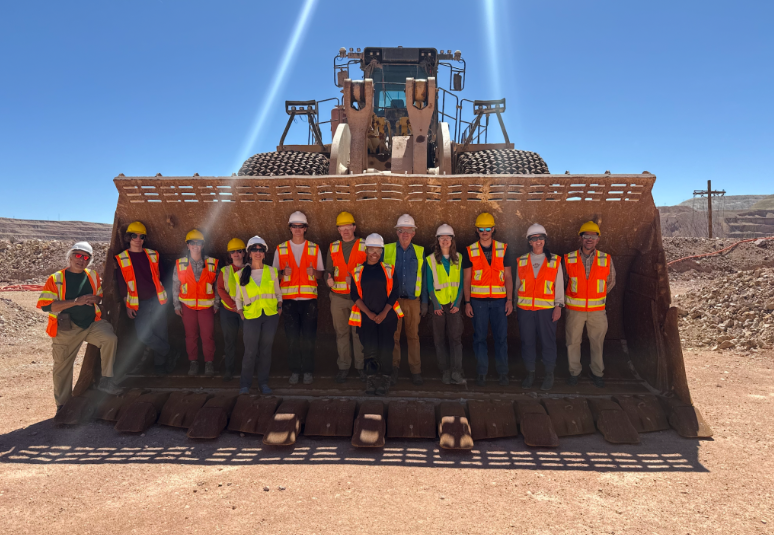
The whole WARM delegation fits inside the bucket of a loader built to move mountains, a small joke about proportion that the machinery seems to have made without meaning to. May 19, 2026 PC: Western Alliance for Reclamation Management
That image, a group of researchers and practitioners standing inside a piece of equipment designed to move two hundred tons of material per cycle, is a useful one to carry into policy conversations about domestic mineral supply chains. The scale of what the electrification economy requires is not abstract. It is physically present in the machinery that produces it, in the walls of the pit that contain it, in the amber pool at the floor that marks what the process leaves behind. Advocates for accelerated domestic production and advocates for rigorous environmental stewardship are often positioned as adversaries in these conversations. At Tyrone, standing inside a tire chain on the floor of an active copper mine, that framing felt insincere.
The operational reality of copper production at this scale is necessary to carry out the energy transition. Copper is critical for renewable energy and the conversations surrounding the impact of mining more of it demand more attention.
Our Two Days in Grant County
The Santa Rita del Cobre has been worked in some form since 1799, when, as course presenter Terrence Humble recounted, a Mimbreño Apache showed a Spanish colonial officer native copper sheets emerging from limestone bedrock. Through nearly a century of failed operators, the deposit consistently defeated those who attempted to develop it. The ore was never the constraint. The binding limitation was structural: no individual actor could assemble the infrastructure, capital concentration, and operational integration the deposit’s scale ultimately required. When the railroad arrived and the Chino Copper Company formed in 1909, what had been structurally impossible became tractable. The copper had not changed. What arrived in 1909 was everything the copper had been waiting on: rail, capital, and an operator built at the scale the deposit had demanded since 1799.
That history is worth sitting with as the United States navigates what may be the most significant domestic mineral mobilization since the postwar period. The critical minerals conversation tends to focus on what is in the ground and how quickly it can be reached. What two days in Grant County made tangible is that the more durable question is what surrounds the deposit, the institutional capacity, the technical infrastructure, the community relationships, and the long-duration accountability that determine whether extraction produces lasting value or deferred cost. At Chino and Tyrone, those questions were being taken seriously by people with the expertise and the commitment to do so. That is not a small thing, and it is not incidental to whether the next generation of domestic copper production succeeds.
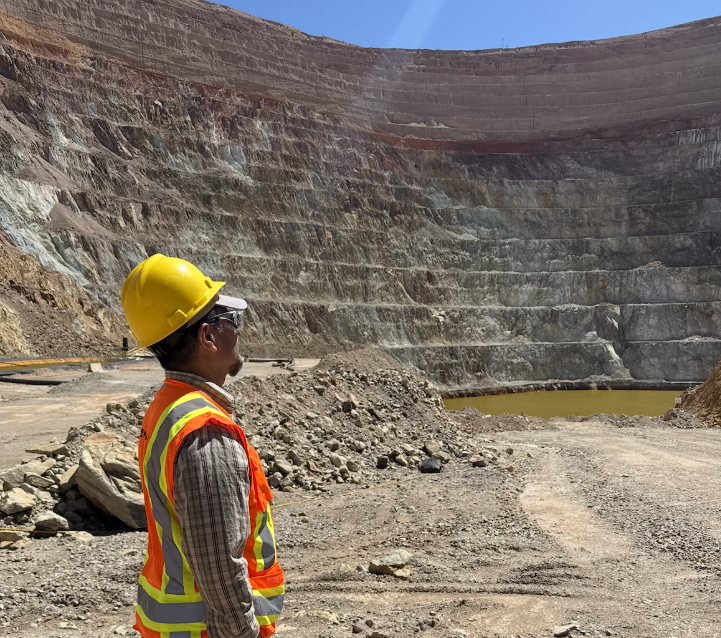
Dr. Ricardo-Vasquez of Western Colorado University looks up at benched walls that spiral down like the inside of a shell, a copper pit that is, in its way, an inverted monument, dug rather than built, and no less deliberate for it. May 19, 2026 PC: McKenna Dunbar
The Freeport teams at both sites understood something that is easy to lose in abstract policy debates: that operational excellence and environmental stewardship are not competing priorities on a mine site. They are the same priority, expressed across different time horizons. The monitoring station standing alone in the desert scrub, the remediation crew working the tailings area at midday, the careful accounting of subsurface conditions beneath buried material, these are not the activities of an industry in tension with its obligations. They are the activities of an industry working to meet them. Whether the frameworks surrounding new mine development are designed to make that posture universal is the question the current moment is asking. Two days in Grant County did not answer it. But they clarified, in ways that the literature alone cannot, why it is worth asking seriously.
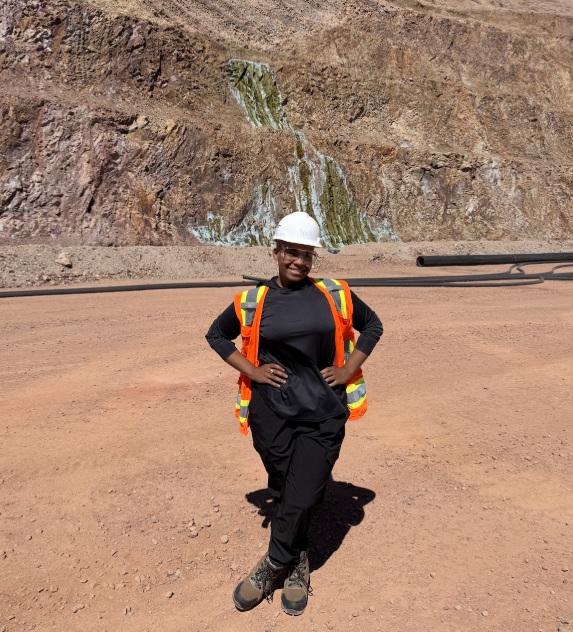
The material is in the ground. What surrounds it will determine everything.